Lake General Carrera Beyond the Marble Caves: Mines, a Dinosaur and Off-the-Beaten-Path Patagonia
Laia travelled around Lake General Carrera with a group of Chilean geologists in 2015. The practical information, including the Marble Caves section, was checked and updated in November 2026 by the Dream Travel Girl team.
"El que se apura en la Patagonia pierde el tiempo." Whoever hurries in Patagonia is wasting their time. Life here moves slowly.
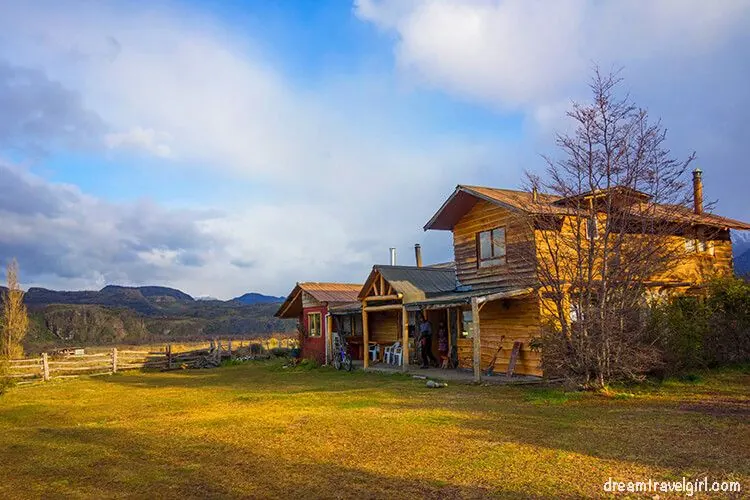
Patagonian culture is a fusion of the neighbouring regions of Chiloé and Argentina, the traces of the original Tehuelche people and immigrants from all over the world. Mate is shared as a sign of welcome, and there are long traditions of wool, leather, basketry and pottery.
My trip around Lake General Carrera, though, had a different focus: geological heritage. Does that sound less exciting? Wait. Travelling with a group of local geologists showed me beautiful landscapes, the hard history of the mining villages… and the story of a brand-new dinosaur.
Lake General Carrera at a glance
- Where: in the Aysén region of Chilean Patagonia, shared with Argentina (where it is called Lago Buenos Aires)
- Size: one of the largest lakes in South America, of glacial origin and surrounded by the Andes
- Famous for: the Marble Caves (Capillas de Mármol) near Puerto Río Tranquilo, and its incredible turquoise colour
- Best time: December to March, when buses run more often and boat tours operate regularly; outside summer it is very quiet
The Marble Caves (Capillas de Mármol)
Let me be honest from the start: the Marble Caves are the lake's main attraction, and I missed them because of the bad weather. I'll have to go back! Here is what you need to know to see them yourself.
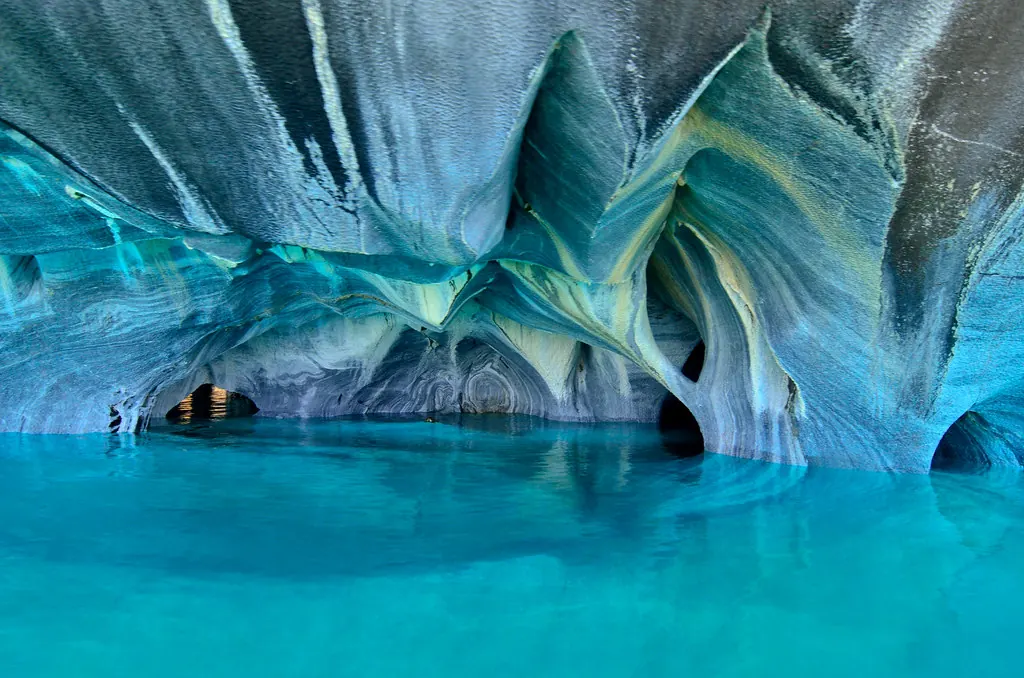
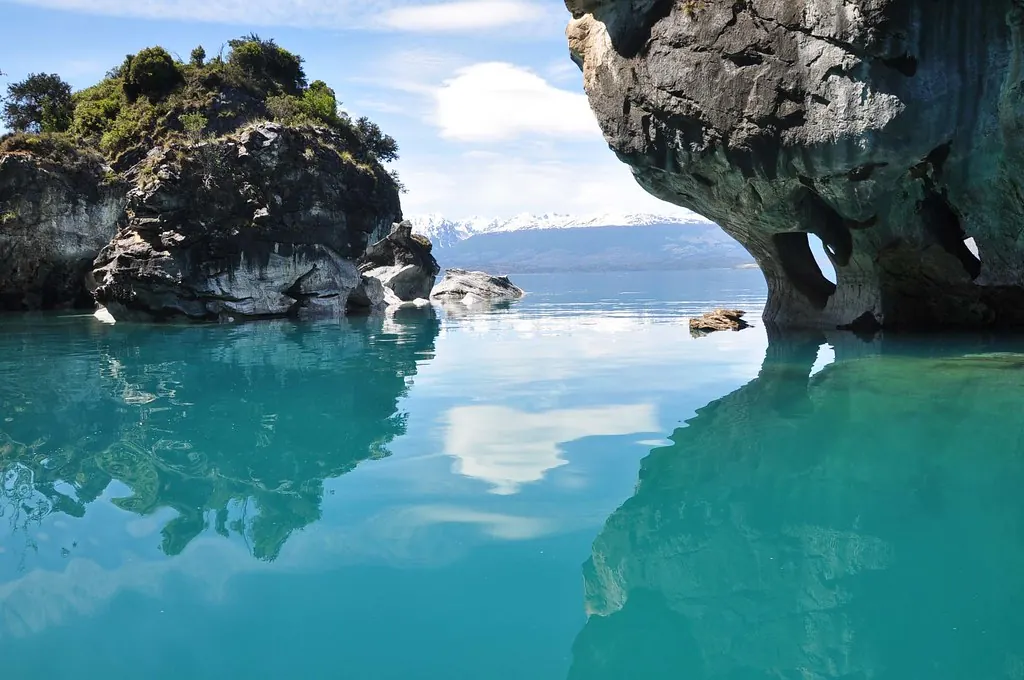
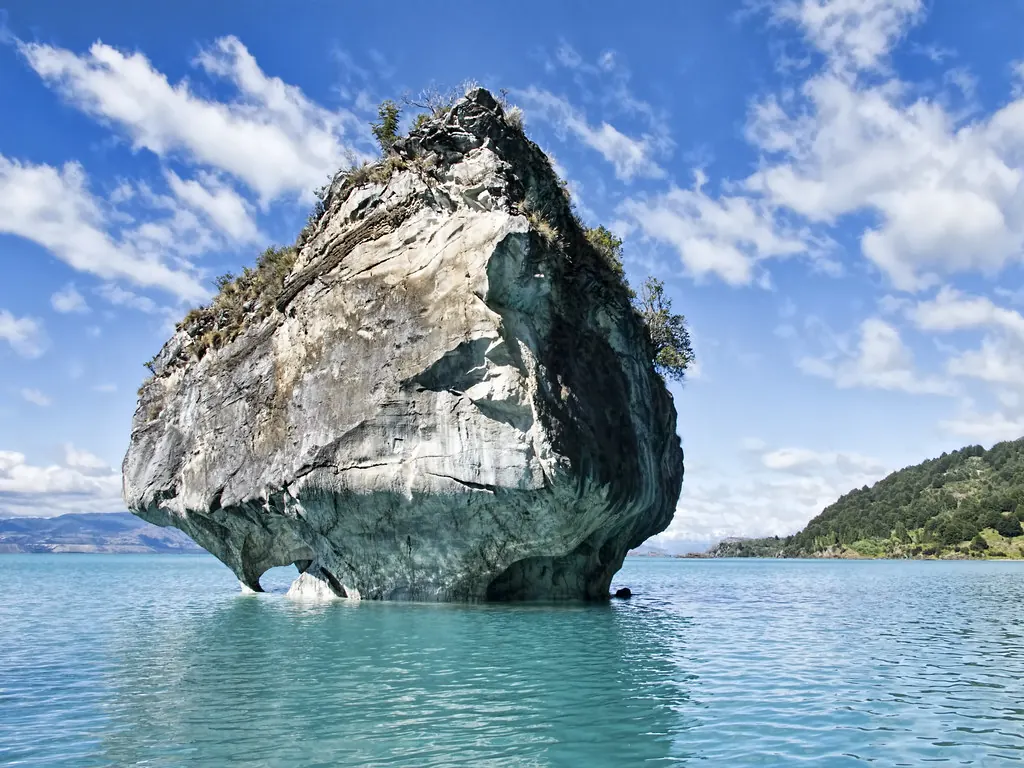
The Capillas de Mármol (Marble Chapels) are small islands and cliffs of marble whose bases have been sculpted by water and wind into caves and tunnels, with swirling blue, grey and white patterns reflected in the turquoise water.
- Where: boats leave from Puerto Río Tranquilo, on the Carretera Austral, roughly 220 km (4–5 hours' drive) south of Coyhaique
- Tours: agencies along the main road sell boat trips of about 1.5–2 hours; kayak tours are also available in calm conditions
- Weather: tours are cancelled in strong winds, which often pick up in the afternoon. Go in the morning and keep a spare day, as I learnt the hard way
- Getting there: by rental car along the Carretera Austral, by bus from Coyhaique (more frequent in summer) or on an organised day tour. Carry cash and plan fuel stops: services are limited
Puerto Sánchez: a mining village and its museum
Many villages here are called "Puerto" (port) because, before the roads, most transport was across the lake.
Puerto Sánchez sits on the lakeshore and can only be reached by a small road over the mountains. It was a mining village: the first settlers were the families of miners who extracted copper and zinc from the 1950s. After good years in the 1970s, the mine closed in the 1980s, and today people live mainly from farming and livestock.
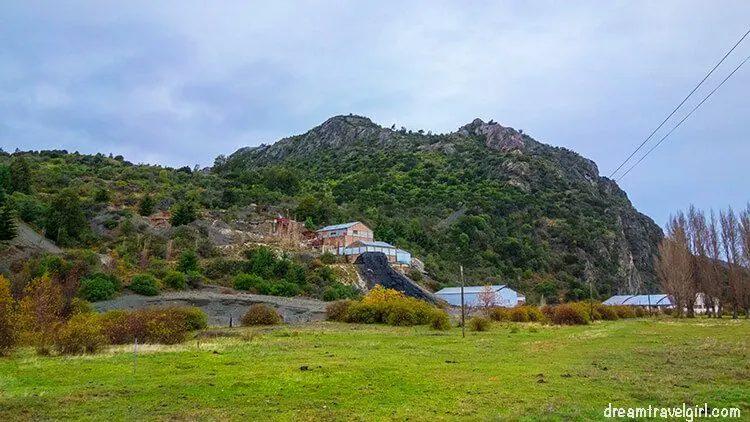
To keep the memory of their origins alive, the villagers opened a small museum about the history of the village and the mine.
Puerto Cristal: the abandoned village
Puerto Cristal was another mining village, but when the mines closed it was abandoned completely. We didn't go there, but we watched a documentary made by an association that preserves its memory. A man who was born in Puerto Cristal came to the screening and cried remembering the old days. Life in that small mining village was hard, but there was a strong sense of community, like one big family.
Guadal and the discovery of Chilesaurus
Puerto Guadal gave us the most surprising story of the trip: a new dinosaur had been discovered nearby! We attended a talk by the geologist whose son, then just seven years old, found the bones.
Manuel Suárez and Rita de la Cruz are both geologists, and they often took their son Diego with them on field trips. He grew up among rocks and learnt early what a fossil was. In 2004, while his parents were working south of Guadal, Diego found the first bones.
"It is important to believe", his father told us. "We never thought there were dinosaurs in the region, so we never saw them. Diego believed in it and was looking for them, and so he found them."
The dinosaur was named Chilesaurus diegosuarezi in his honour. It lived about 145 million years ago, at the end of the Jurassic, and was around 3 metres long. It was a sensation because it combines features of several different dinosaur groups, and scientists still debate where it fits in the family tree.
Chile Chico: the town of the sun
Chile Chico, right by the Argentinian border, is called "the town of the sun" thanks to its microclimate. I could confirm it: after travelling all around the lake in the rain, it was finally sunny! The town has a rich history of settlers from Chiloé, the rest of Chile and abroad, and it suffered the violent eruption of the Hudson volcano in 1991. Today it is a pleasant sunny town with a viewpoint hill over the lake.
Bonus: a concert on the ferry
To return to Coyhaique, we took the ferry across the lake from Chile Chico to Puerto Ingeniero Ibáñez. A band was travelling on the same ferry and gave us a free concert. They had never played on a ferry, and I had never seen a concert on one. A magical end to a wonderful weekend in off-the-beaten-path Patagonia.
Planning your trip around Lake General Carrera (2026)
- Base: Coyhaique, the regional capital with an airport (Balmaceda), car rentals and buses
- Route: drive south on the Carretera Austral to Puerto Río Tranquilo and Puerto Guadal, continue to Chile Chico, and return by ferry to Puerto Ingeniero Ibáñez to make a loop
- Ferry: the Chile Chico – Puerto Ibáñez crossing takes a couple of hours; book ahead in summer, especially with a car
- Practicalities: distances are long, roads partly gravel, fuel stations and ATMs scarce. Bring cash and warm, waterproof clothes
FAQ
How do you get to the Marble Caves in Chile?
Travel to Puerto Río Tranquilo on the Carretera Austral (about 4–5 hours by road from Coyhaique) and take a boat or kayak tour from the town.
When is the best time to visit Lake General Carrera?
December to March, for the best weather, more transport and regular boat tours. Morning tours are usually calmer.
Who discovered Chilesaurus?
Diego Suárez, the seven-year-old son of two Chilean geologists, found the first bones near Puerto Guadal in 2004.
18 comments
thangasivam
Wonderful..
colibrist
🙂
fifi + hop
This looks incredible – great photos!
colibrist
Thank you! The region is incredible 🙂
evozeta
Gorgeous pictures as always! And that truck is a long way from home it seems (Germany) – was it the band’s truck?
colibrist
Waw, that is observation! I did not realise it was German 🙂 I don’t know if it was the band’s truck, I don’t think so. The band was Chilean in any case. How a German truck ended up in Patagonia we will not know 🙂
Marcella ~ WhatAWonderfulWorld
Absolutely beautiful! I really cannot wait to see more of this stunning region for myself. Your photos are wonderful 🙂
colibrist
Thank you! I hope you can visit Patagonia 🙂
Ruth
You have the ability to pick the most beautiful locations for your trips. I will be very interesting to learn more about the Patagonian customs and traditions.
colibrist
Thanks Ruth! This time was coincidence since the reason to go to that part of Patagonia was to visit a friend, but I was happy to be there! Unfortunately I did not have enough time to go into culture… That will be for next time 🙂
mytravelmonkey
I’ve always wanted to visit Patagonia. What an amazing experience and to actually have been to the place where they discovered a new dinosaur – my son would be so into that! Stunning photos are always. Thanks for linking up with #MondayEscapes
colibrist
Thanks Ting! It is indeed an amazing experience, and I think there might be a museum in the future!
Naga
It was very nice to read your post. I came across it as I am searching for a ferry to cross from Chile Chico to Puerto Sanchez. There is a ferry from Puerto Ibinez to Chile Chico. What ferry did you take for this trip? Thank you.
Laia
Hello Naga, I’m really sorry but I don’t remember much about the ferries in Chile. I took the ferry from Chile Chico to Puerto Ibánez, but I don’t know if there is a ferry to Puerto Sanchez.
Diana
Hi Laia, what an amazing travels have you made.
I liked very much the story of the small boy and the not so small dinosaur, which now carries his name, the diegosuarezi. Very funny!
It shows that if you believe in a goal, you can get to it. Luckily, the biggest animal you met in Patagonia was just a horse. The landscape looks very rough though.
Laia
Hi Diana,
I also liked a lot the story of Diego Suárez. If you believe in it, you can get it. It’s very inspiring for all of us who believe in dreams.
Yes, I’m also happy that I didn’t meet anything bigger than a horse… the dinosaur was very interesting but I wouldn’t like to find a real one!
Diana Garcés
Que belleza de lugar guapa, para mi la Patagonia es de esos lugares que debes conocer antes de morir, parece un paraíso de tranquilidad y paisajes preciosos, que enamoran y que transportan.
Es impresionante que un país con sus condiciones geográficas pueda tener lugares tan lindos y tranquilos reconstruidos en poco tiempo, es impresionante. Un lugar precioso para disfrutar, lo dicho, hay que ponerlo en la lista 🙂
Laia
Siii es un lugar precioso y que merece la pena visitar. Aunque si no te gusta mucho el frío te recomiendo ir en verano, yo todavía no he olvidado el frío que pasé 😉
Comments are closed.